
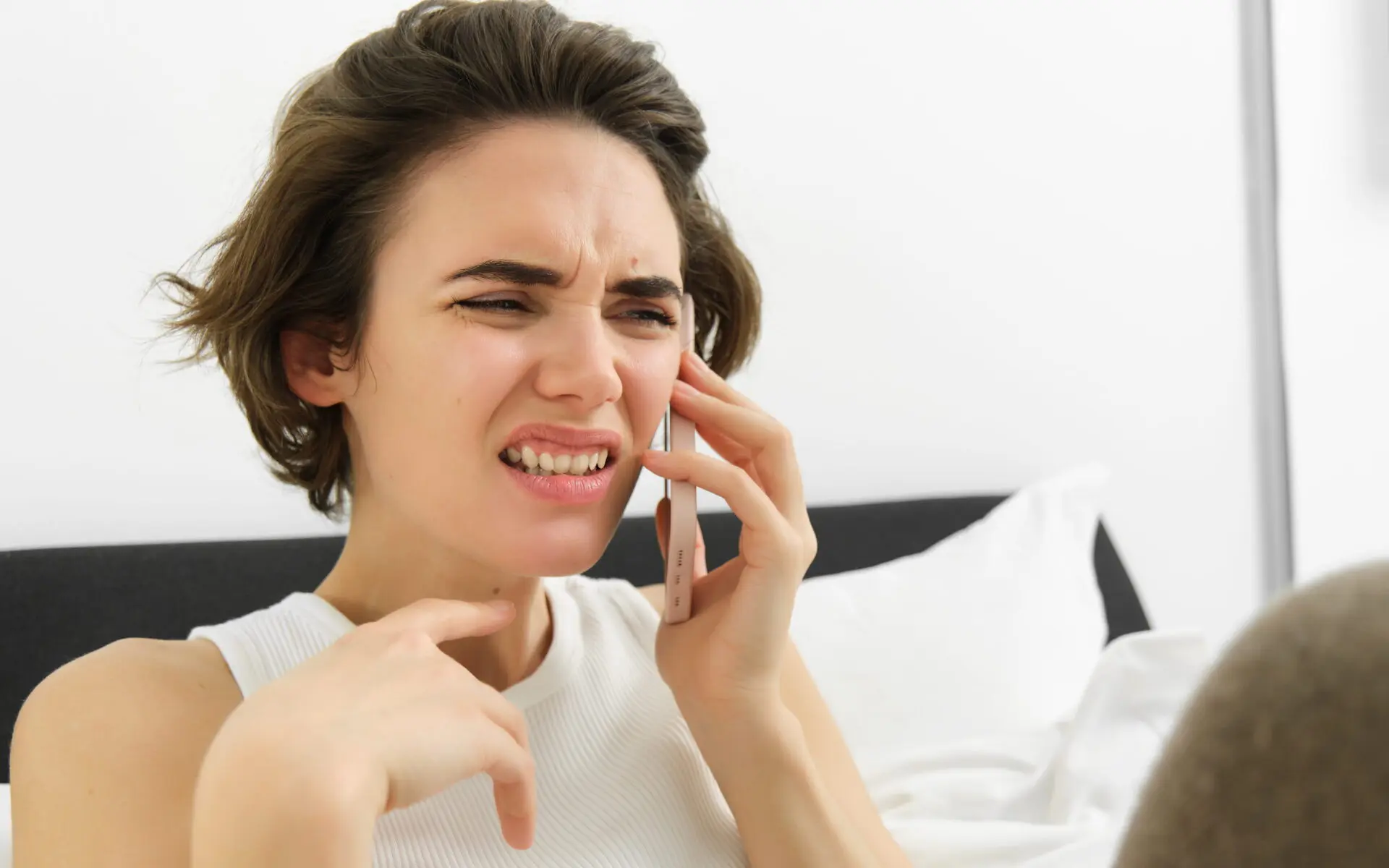
You wake up with a sore jaw. Maybe chewing breakfast feels uncomfortable, or you hear a click when you open your mouth. If someone has mentioned that you grind your teeth at night, you may wonder whether the two are connected and what you should do about it.
November is TMJ Awareness Month, a useful reminder that jaw discomfort deserves attention when it keeps coming back.
At DeJesus Dental Group, we can help you talk through what you’re noticing, examine your teeth and jaw, and consider the next step that fits your situation.
What’s the Difference Between TMJ Disorder and Teeth Grinding?
You have a temporomandibular joint, or TMJ, on each side of your head, just in front of your ears. These joints and the surrounding muscles help you speak, chew, and open and close your mouth. When the joints or muscles become painful or don’t work comfortably, the condition may be called a temporomandibular disorder, or TMD. Many people simply call it “TMJ.”
Bruxism means grinding or clenching your teeth. It can happen while you’re awake, such as when you’re concentrating, or during sleep when you may have no idea it’s occurring. Bruxism and jaw pain can happen together, but grinding isn’t the explanation for every painful jaw. An evaluation can help sort out what may be contributing to your symptoms.
What Signs Might You Notice?
Jaw pain or tenderness is one of the most common reasons people seek help. You might feel discomfort near your ears, in your cheeks, or in the muscles you use to chew. Your jaw may feel stiff, or opening your mouth widely may be difficult. Some people also notice headaches or a clicking or popping sound when their jaw moves.
A click by itself doesn’t necessarily mean something is wrong. Painless jaw sounds are common and usually don’t need treatment. Clicking is more useful to mention to us when it comes with pain, stiffness, or trouble moving your jaw.
Teeth grinding can leave different clues. You may wake with tired jaw muscles or a headache, notice tooth sensitivity, or see a chipped or worn tooth. Sometimes the first clue comes from someone who hears you grinding during sleep. These signs are worth discussing, but they don’t establish a diagnosis on their own.
What Causes Jaw Pain and Bruxism?
It’s understandable to want one clear answer, especially if the discomfort is affecting meals or sleep. TMJ can involve the jaw joint, the chewing muscles, or both, and its cause isn’t always clear. An injury may play a part in some cases. Grinding or clenching may also contribute to muscle soreness and tooth wear, while other dental or medical concerns can cause pain in the same area.
Stress may contribute to teeth grinding or clenching, and sleep bruxism can also be associated with certain sleep disorders. However, these factors don’t explain every case.
That’s why we wouldn’t assume every headache is caused by grinding or every jaw click is a disorder. We start with your symptoms and look at the fuller picture before discussing care.
What Happens During an Evaluation?
We’ll ask what you’ve been feeling and whether activities such as chewing make it worse. Let us know if you’ve noticed morning soreness, a change in how easily your mouth opens, or possible grinding during sleep. Those details can help us understand the pattern.
An examination may include checking your jaw movement and the surrounding muscles for tenderness. We may also look for signs of tooth wear or damage that could be related to grinding or clenching.
Sometimes further evaluation is needed to rule out another source of pain. Depending on your symptoms, this may involve dental imaging or a referral to another healthcare professional. You can tell us if dental visits make you anxious, too.
What Treatment Options May Help?
Starting with manageable changes
For many people with TMJ symptoms, care begins with simple, reversible steps. Depending on your symptoms, a dentist may suggest temporarily choosing softer foods, avoiding habits that strain your jaw, or applying heat or cold. We share more ideas in our article on managing TMJ discomfort at home. Some symptoms improve over time, so the goal is to address what’s bothering you without rushing into treatment that permanently changes your teeth or bite.
Your needs may be different if tooth damage, persistent pain, or another concern is present. We’ll discuss recommendations during your evaluation.
Could a nightguard help with teeth grinding?
A dental appliance worn over the teeth may help protect them from grinding damage. DeJesus Dental Group also describes a dental splint as an option on our TMJ treatment. Whether an appliance is appropriate, and which type makes sense, depends on your symptoms and examination.
A nightguard is not a guaranteed solution for jaw pain. If you use one and it causes pain or makes your symptoms worse, let your dentist know so it can be reassessed.
What if the pain continues?
Ongoing symptoms may call for a closer look or a different approach. Your dentist may discuss other conservative care or recommend evaluation by an appropriate health professional. Depending on your condition, other options may include physical therapy or exercises guided by a qualified professional. The right path depends on whether the main concern is muscle pain, joint movement, tooth wear, or something else.
When Should You Talk to a Dentist?
Consider scheduling an evaluation if jaw pain keeps returning, chewing has become uncomfortable, you have trouble opening your mouth, or you’ve noticed tooth sensitivity or damage that may be related to grinding.
You don’t have to wait until you know whether the problem is TMJ or bruxism.
If a tooth breaks or you develop severe dental pain, contact DeJesus Dental Group so the immediate concern can be assessed. If your jaw becomes stuck open or closed, seek prompt professional evaluation.
Jaw symptoms can be confusing, particularly when they come and go. You deserve an explanation that makes sense and a chance to discuss your options without pressure.
If you’re concerned about jaw pain or teeth grinding, contact our Bridgeport/Trumbull or Shelton team to arrange an evaluation. You can also request an appointment online to discuss your symptoms and learn more about your treatment options.