
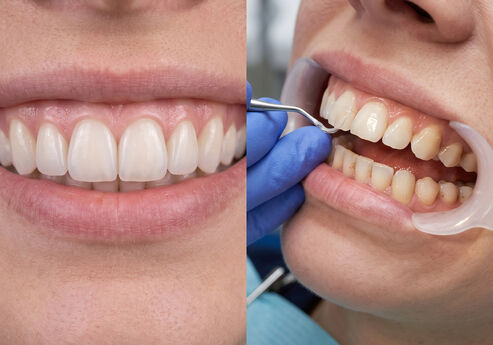
You know that feeling when one small detail in your smile seems to be the only thing you notice in every photo?
Maybe it’s a chipped front tooth. A narrow gap. An uneven edge. Or discoloration that hasn’t improved as much as you hoped with whitening. These concerns may seem minor to someone else, but when they affect how freely you smile, they don’t feel minor at all.
And that’s often when the same question comes up: should you choose veneers or dental bonding?
Both treatments can improve the color, shape, spacing, and overall balance of your smile. But they accomplish those changes in different ways. Veneers generally involve more planning and may offer broader, longer-lasting cosmetic changes. Bonding is usually more conservative and can work well when the concern is smaller or limited to one or two teeth.
Here’s how we look at it. The right cosmetic treatment isn’t automatically the most dramatic one. It’s the option that fits your teeth, your goals, your comfort level, and the amount of maintenance you’re comfortable with over time.
This comparison focuses mainly on traditional porcelain veneers and direct dental bonding, which are two options patients often discuss with a cosmetic dentist in Bridgeport or Shelton.
What Are Dental Veneers?
Dental veneers are thin coverings designed to fit over the front surfaces of selected teeth. They may be made from porcelain or composite material, although porcelain veneers are often chosen when someone wants to improve several visible teeth as part of a coordinated smile change.
Veneers may help conceal concerns such as chips, uneven tooth shapes, small spaces, worn edges, and certain types of discoloration. Because each veneer is planned around the tooth it will cover, the shape, shade, and proportions can be customized to complement the surrounding teeth and facial features.
Traditional porcelain veneers usually require a small amount of enamel to be removed from the front or sides of the teeth. This creates space for the veneers and helps prevent the finished teeth from looking bulky. Impressions or digital scans may then be taken so the restorations can be created to fit your smile.
Because enamel doesn’t grow back, traditional porcelain veneer treatment generally isn’t considered reversible. However, not every veneer technique is identical. Some cases may involve less preparation than others, which is why a personalized examination matters.
You can learn more about the different options available on our veneers service page.
What Is Dental Bonding?
Dental bonding uses a tooth-colored composite resin that is placed directly onto the tooth. The material is carefully shaped, hardened with a curing light, adjusted, and polished until it blends with the surrounding smile.
Think of bonding as detailed sculpting. Instead of placing a laboratory-made shell over the tooth, we work directly with the composite material to rebuild a chipped edge, soften an uneven shape, close a small space, or conceal a localized area of discoloration.
Bonding often requires little or no removal of healthy enamel. Depending on the number of teeth involved and the complexity of the changes, it can frequently be completed in one appointment. That makes it appealing to adults who want a more conservative improvement without committing to a more involved treatment process.
But there’s a tradeoff. Composite resin can stain, lose some of its polish, wear down, or chip over time. It can be repaired or refreshed, but it may require attention sooner than porcelain.
What Is the Main Difference Between Veneers and Bonding?
At first, veneers and bonding may sound like two versions of the same idea. Both cover or reshape part of a tooth. Both can be matched to your smile. And both can produce natural-looking improvements when planned carefully.
The biggest difference is the scope of treatment.
Bonding is often used for a focused correction. Maybe one front tooth has a small chip. Maybe two teeth have a slight space between them. Maybe the edge of one tooth looks uneven beside the other. In those situations, bonding may provide enough control to make the change without altering much of the natural tooth.
Veneers may be considered when several teeth need to be changed together. For example, you may be concerned about a combination of discoloration, worn edges, uneven sizes, and spaces across the front of your smile. Custom veneers can allow a cosmetic dentist to plan those teeth as a group, helping the result look balanced rather than pieced together.
Neither approach is automatically better. One simply may be better suited to the type and scale of change you’re hoping to make.
Which Option Looks More Natural?
Both veneers and bonding can look natural. The final appearance depends on the treatment plan, the material, the condition of the teeth, and how carefully the color and shape are matched.
Porcelain has translucent qualities that can resemble natural tooth enamel. It also tends to resist staining better than composite resin, which may be helpful when several front teeth are being treated.
Bonding can blend especially well when only a small part of a tooth needs to be repaired or reshaped. Much of the natural tooth remains visible, while the composite fills or adjusts the specific area that concerns you.
And honestly, a natural result usually isn’t about creating perfectly identical teeth. Natural smiles have slight variations in texture, shape, and color. The goal is to create balance while preserving the features that make your smile feel like your own.
How Do Veneers and Bonding Compare for Durability?
Traditional porcelain veneers are generally more resistant to staining and wear than composite bonding. But no cosmetic dental treatment lasts forever.
Veneers can chip, loosen, develop wear along the edges, or eventually need replacement. Bonding may stain, wear, or fracture sooner, especially when it’s placed along biting edges or exposed to heavy pressure.
How either treatment holds up depends on several factors. Your bite matters. So do your eating habits, oral hygiene, the location of the treated tooth, and whether you grind or clench your teeth.
That’s why we’re careful with promises about how many years a treatment will last. General estimates can be helpful, but they can’t predict exactly how a restoration will perform in your mouth. Bonding may need polishing, repair, or replacement over time, while porcelain typically resists staining better than composite resin.
If we see signs of grinding or clenching, we may discuss a custom nightguard. A nightguard can help reduce the pressure placed on your natural teeth and cosmetic dental work while you sleep.
Is Dental Bonding More Affordable Than Veneers?
Dental bonding often has a lower initial cost because the resin is placed and shaped directly during the appointment. Porcelain veneers typically involve additional planning, tooth preparation, impressions or digital scans, and custom fabrication.
But here’s where the decision becomes more personal. A lower upfront cost doesn’t always mean a treatment will cost less over many years. Bonding may require more frequent polishing, repairs, or replacement. Veneers may last longer in certain situations, but they involve a greater initial commitment and may also need replacement eventually.
Dental insurance coverage varies. Procedures performed only to change appearance may not be covered, while treatment related to damage or function may be handled differently depending on the plan.
Before moving forward, we’ve found that it helps to review the full treatment estimate, expected maintenance, and possible future costs. You should understand the practical side of the decision, not just what the finished smile may look like.
What Cosmetic Concerns Can Veneers and Bonding Address?
There’s some overlap between the two treatments. Veneers and bonding may both be considered for chipped teeth, minor gaps, uneven edges, discoloration, or teeth that appear smaller than the surrounding teeth.
But neither option can correct every dental concern.
If a tooth has extensive decay, a large fracture, or significant structural weakness, a crown or another restorative treatment may provide better protection. If spacing or crowding is related to tooth position, orthodontic treatment may be more appropriate than covering the visible problem.
Active gum disease and untreated cavities should also be addressed before elective cosmetic work begins. Veneers and bonding may change the appearance of teeth, but they don’t replace the need for a healthy foundation.
Sometimes whitening is worth considering first, especially when the main concern is tooth color. Existing bonding and veneers don’t whiten in the same way natural enamel does, so treatment order can affect how well the final shades match.
What Happens During a Cosmetic Consultation?
A cosmetic consultation starts with a conversation. We’ll ask what you notice when you smile, what you’d like to change, and how subtle or noticeable you want the result to be.
Then we look at the full picture. That includes your teeth, gums, bite, existing dental work, facial features, and long-term oral health. A small chip may seem like a simple bonding case, but if the tooth keeps chipping because of bite pressure, repairing the surface without addressing the cause may not give you a stable result.
This is also where Smile Design can help. Smile design considers how your teeth, lips, gums, bite, and facial proportions work together. Digital imaging may also allow you to explore possible changes before deciding whether treatment feels right for you. We offer this planning approach as part of our cosmetic services at both Connecticut locations.
Maybe you’re leaning toward veneers when bonding could accomplish what you want more conservatively. Or maybe you’re hoping bonding can create a broader transformation that would be more predictable with veneers. The consultation gives us room to work through that messy middle together.
How Can You Care for Veneers or Dental Bonding?
The daily routine is familiar. Brush your teeth twice a day, clean between them each day, and continue regular dental exams and professional cleanings.
Cosmetic work covers only part of the tooth. The natural tooth and surrounding gums still need protection from decay and gum disease.
It also helps to avoid chewing ice, biting pens, using your teeth to open packages, or biting your fingernails. These habits can damage natural enamel, bonding, and veneers.
And if anything feels different after treatment, tell us. A bite that feels slightly high or uneven can place extra pressure on a restoration. Small adjustments made early may help prevent unnecessary wear.
Which Cosmetic Option Is Right for You?
Veneers may be worth considering when you want to coordinate changes across several front teeth and are comfortable with the treatment process and enamel preparation involved.
Bonding may make sense when the concern is smaller, you want to preserve as much natural tooth structure as possible, or you prefer an option that can often be completed more quickly.
But those are starting points, not hard rules.
The condition of your teeth, your bite, your goals, and your expectations all shape the recommendation. Sometimes the best option is bonding. Sometimes it’s veneers. And sometimes we realize another cosmetic or restorative treatment would support your smile more effectively.
Meet With a Cosmetic Dentist in Bridgeport or Shelton
You don’t need to decide between veneers and bonding before your appointment. You only need to know what you’d like to change.
At DeJesus Dental Group, we take the time to understand your concerns, examine your oral health, and explain the options without pressure. Whether you’re interested in repairing one chipped tooth or planning a broader smile transformation, we’ll help you compare the benefits, limitations, preparation, and maintenance involved.
To begin, request a consultation with our dental team at our Bridgeport/Trumbull Line dental office or our Shelton dental office. Together, we can create a treatment plan that feels comfortable, realistic, and personal to you.