
There’s a particular kind of worry that comes with a tooth that suddenly starts hurting.
Maybe it’s a dull ache you’ve been trying to ignore. Maybe part of the tooth broke while you were eating. Or maybe you’ve already had work done on that tooth, and now you’re wondering, “Can this still be fixed, or am I going to lose it?”
We hear that concern often. And usually, the answer isn’t something we can give based on pain alone.
At DeJesus Dental Group, we look for ways to preserve natural teeth whenever doing so makes sense for your health, comfort, and long-term dental needs. Modern dentistry gives us several ways to treat teeth affected by decay, infection, fractures, or wear. Sometimes a filling or crown is enough. Sometimes the tooth needs root canal treatment or periodontal care.
But there are also situations when so much of the tooth or its supporting structures have been damaged that restoring it may no longer offer a predictable result.
So how do we tell the difference?
It starts with understanding what is actually happening beneath the surface.
Why We Try to Save a Natural Tooth When We Can
Here’s how we look at it: if a natural tooth has enough healthy structure and support to function comfortably, preserving it is usually worth considering.
Your teeth work together when you bite, chew, and speak. The roots of natural teeth are also supported within the jawbone and surrounding tissues. When we can repair a damaged tooth through restorative dentistry, we may be able to maintain that natural structure rather than replace it.
And sometimes a tooth looks worse than it actually is.
A large cavity might still be restorable. An infected tooth might be treated with root canal therapy and then protected with a restoration. A cracked tooth may be stabilized depending on where the crack is located and how much healthy tooth remains.
That’s why we’re careful about declaring a tooth “unsavable” before we’ve examined it. The decision usually comes down to a combination of factors rather than one symptom.
When Severe Tooth Decay Leaves Too Little Tooth to Restore
Cavities start small, but decay can gradually remove more and more healthy tooth structure.
When we catch decay earlier, treatment may be relatively straightforward. As the cavity becomes larger, though, a filling may no longer provide enough support. In some cases, a dental crown can cover and protect the weakened tooth.
The situation becomes more complicated when decay extends deep below the gumline or leaves very little solid tooth above the gums.
Think of it like trying to put a new roof on a house when the walls underneath are no longer strong enough to hold it. The restoration needs a dependable foundation.
If there isn’t enough healthy tooth structure to securely support a restoration, or restoring the tooth would require compromising the surrounding tissues, extraction may need to become part of the conversation.
But again, the size of a cavity alone doesn’t answer that question. We have to evaluate what remains.
Does a Dental Abscess Mean the Tooth Has to Come Out?
Not necessarily.
And this is an important distinction because the word “infection” can sound frightening.
An abscess can develop when bacteria reach the pulp inside a tooth or the tissues around its root. You might notice throbbing pain, tenderness while chewing, swelling, a pimple-like bump on the gum, or an unpleasant taste. Some dental infections cause significant pain. Others can be surprisingly quiet.
Depending on the tooth and the extent of the problem, root canal treatment may be able to remove infected or inflamed tissue from inside the tooth and allow the natural tooth to remain in place.
So an infected tooth is not automatically a lost tooth.
What matters is whether the infection can be treated and whether the tooth still has enough healthy structure and bone support to be restored afterward. If the root is severely fractured, the tooth cannot be predictably restored, or there are other significant complications, oral surgery and tooth extraction may be considered.
And if you have significant swelling, severe dental pain, or another urgent concern, it’s better to have it evaluated rather than waiting to see whether it settles down. Our dental emergency care is designed for situations where you need timely answers about what’s happening and what should come next.
What About a Cracked or Fractured Tooth?
Cracks are one of those dental problems that can be frustratingly unpredictable.
You know that quick, sharp sensation when you bite down on something and immediately stop chewing on that side? That can happen with a cracked tooth. Other people notice sensitivity to temperature, occasional discomfort, or no obvious symptoms at all.
And not every crack means the tooth needs to be removed.
A fracture involving part of the chewing surface may sometimes be repaired or protected with a crown. Even some deeper cracks may have treatment options depending on their location.
But when a crack travels far below the gumline, extends significantly into the root, or causes the tooth to separate into sections, saving the entire tooth may become much more difficult.
One reason we take cracks seriously is that they don’t heal the way a broken bone does. Treatment is usually focused on protecting the remaining tooth and reducing the chance that the fracture will continue to spread.
The earlier we can evaluate a suspicious crack, the more information we have when considering possible ways to preserve the tooth.
Can Gum Disease Make an Otherwise Healthy Tooth Unsavable?
Yes, because the tooth is only one part of the picture.
A tooth can look relatively intact above the gumline and still have serious problems with its foundation.
Periodontitis affects the gums, periodontal ligament, and bone that help support your teeth. As support is lost, a tooth may begin to loosen or shift. You might also notice gum recession, bleeding, persistent bad breath, or changes in the way your teeth come together.
But loose doesn’t automatically mean hopeless either.
With non-surgical gum disease treatment and ongoing periodontal care, some teeth affected by gum disease can be maintained. The outlook depends on factors such as the amount and pattern of bone loss, tooth mobility, inflammation, bite forces, and your overall periodontal health.
When supporting bone and tissue have been lost to the point that a tooth can no longer function predictably, however, removal may be considered as part of a broader treatment plan.
What If the Tooth Has Already Had a Lot of Dental Work?
This is where things can get a little messy, because heavily restored teeth have histories.
Maybe the tooth started with a small filling years ago. Then the filling became larger. Later, the tooth needed a crown. Perhaps it eventually developed decay around an older restoration, cracked, or needed root canal treatment.
None of those treatments automatically means the next step will be extraction. Dental restorations are meant to repair and protect teeth, but both natural tooth structure and restorations can change over time.
When we evaluate a tooth that has been treated several times, we’re looking at what remains today.
Are there enough healthy teeth to support another restoration? Is the root sound? Can we control decay or infection? How is the bone around the tooth? What kind of pressure does the tooth receive when you bite?
Sometimes another repair makes sense. Sometimes repeatedly rebuilding a severely compromised tooth may offer a less predictable outcome.
Our job is to help you understand that difference before you make a decision.
Dental Trauma Can Change the Situation Quickly
A fall. A sports accident. A collision. Biting down on something unexpectedly hard.
Dental injuries don’t exactly schedule themselves conveniently.
After trauma, a tooth may chip, fracture, loosen, move out of position, or even come completely out of its socket. The root and surrounding bone can also be injured even when the visible portion of the tooth doesn’t look badly damaged.
Some injured teeth can be saved, particularly when they’re evaluated promptly. Treatment depends on the type of injury, whether the pulp or root has been affected, and the condition of the tissues supporting the tooth.
So if you’ve injured a tooth, especially if it is loose, displaced, fractured, or knocked out, contacting a dentist promptly gives us the opportunity to assess the damage and discuss what can realistically be done.
How Do We Actually Decide Whether a Tooth Can Be Saved?
This is probably the most important part of the conversation.
We don’t decide based on how ugly the tooth looks in the mirror. And we don’t decide based only on how much it hurts.
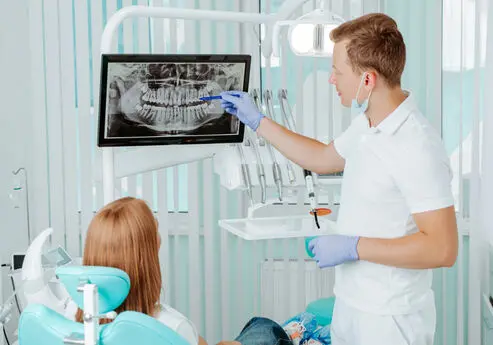
During an examination, we may use dental X-rays and other diagnostic tools along with a careful clinical evaluation. We look at the amount of healthy tooth structure remaining, how far decay or a fracture extends, the condition of the pulp and roots, the health of the surrounding gums and bone, and whether the tooth can be restored in a way that allows it to function.
We also look beyond that single tooth.
What does your bite look like? What other dental work do you have? Are neighboring teeth healthy? Do you grind or clench? What are your priorities for treatment? And if you’re already anxious about the process, what can we do to make the next steps feel more manageable?
That bigger picture matters.
Because the question isn’t simply, “Can we technically do something to this tooth?”
A better question is, “Does restoring this tooth make sense for you, and is there a reasonable expectation that it can function well afterward?”
Signs That Tell Us It’s Time for an Evaluation
Pain is one reason to call, but you don’t have to wait until a tooth is keeping you awake at night.
Lingering sensitivity to hot or cold, discomfort when biting, swelling around a tooth, a recurring pimple on the gum, a loose permanent tooth, a visible crack, a broken piece of tooth, or an unpleasant taste coming from one area are all good reasons to have something checked.
Sometimes the cause is relatively minor.
Sometimes it isn’t.
And that uncertainty is exactly why an examination helps. Symptoms can overlap, so trying to diagnose the problem based on pain alone can be misleading.
If the Tooth Can’t Be Saved, What Happens Next?
Hearing that extraction is the more reasonable option can be disappointing, especially if you came into the appointment hoping to save the tooth.
We understand that.
So we don’t want the conversation to stop at, “The tooth has to come out.”
We want you to understand why we’re recommending it, what the procedure involves, how we’ll approach your comfort, and what choices you may have afterward.
Depending on where the missing tooth is located and your individual oral health, replacement options may include a dental implant, a dental bridge, or a partial denture.
There isn’t one replacement option that is automatically right for everyone. Bone health, gum health, neighboring teeth, medical history, budget, treatment time, and your personal preferences can all shape the decision.
And you don’t have to figure all of that out by yourself. We’ll talk through it with you.
Earlier Care Can Give Us More Options
It’s tempting to wait when a tooth only hurts once in a while.
Maybe it stopped hurting. Maybe work got busy. Maybe the thought of sitting in the dental chair makes you tense up before you’ve even picked up the phone.
We get it.
But one thing we’ve learned from caring for patients over the years is that knowing what’s happening is usually easier than living with the question mark.
Some dental problems are more straightforward to treat before they become larger or involve more of the tooth. Early evaluation may give us more treatment options, although every tooth and every situation is different.
And sometimes the best news is simply hearing, “Yes, we can work with this.”
Worried That Your Tooth Can’t Be Saved? Let’s Find Out Together
If you have a painful, broken, infected, or loose tooth, you don’t need to decide on your own whether it can be saved.
That’s our job to figure out with you.
At DeJesus Dental Group, we care for patients in Bridgeport and Shelton with an emphasis on clear explanations, personalized treatment planning, and comfort throughout the process. We’ll examine the tooth, explain what we see, and talk through the reasonable options before treatment moves forward.
Sometimes that means repairing and protecting your natural tooth.
Sometimes it means recognizing that the tooth has reached a point where removing it may better support your oral health.
Either way, you deserve to know why.
If something in your mouth has been bothering you, even if you’re not sure whether it’s “bad enough” to call, consider having it looked at. A dental evaluation can replace that uncertainty with something much more useful: a plan. Contact DeJesus Dental Group!